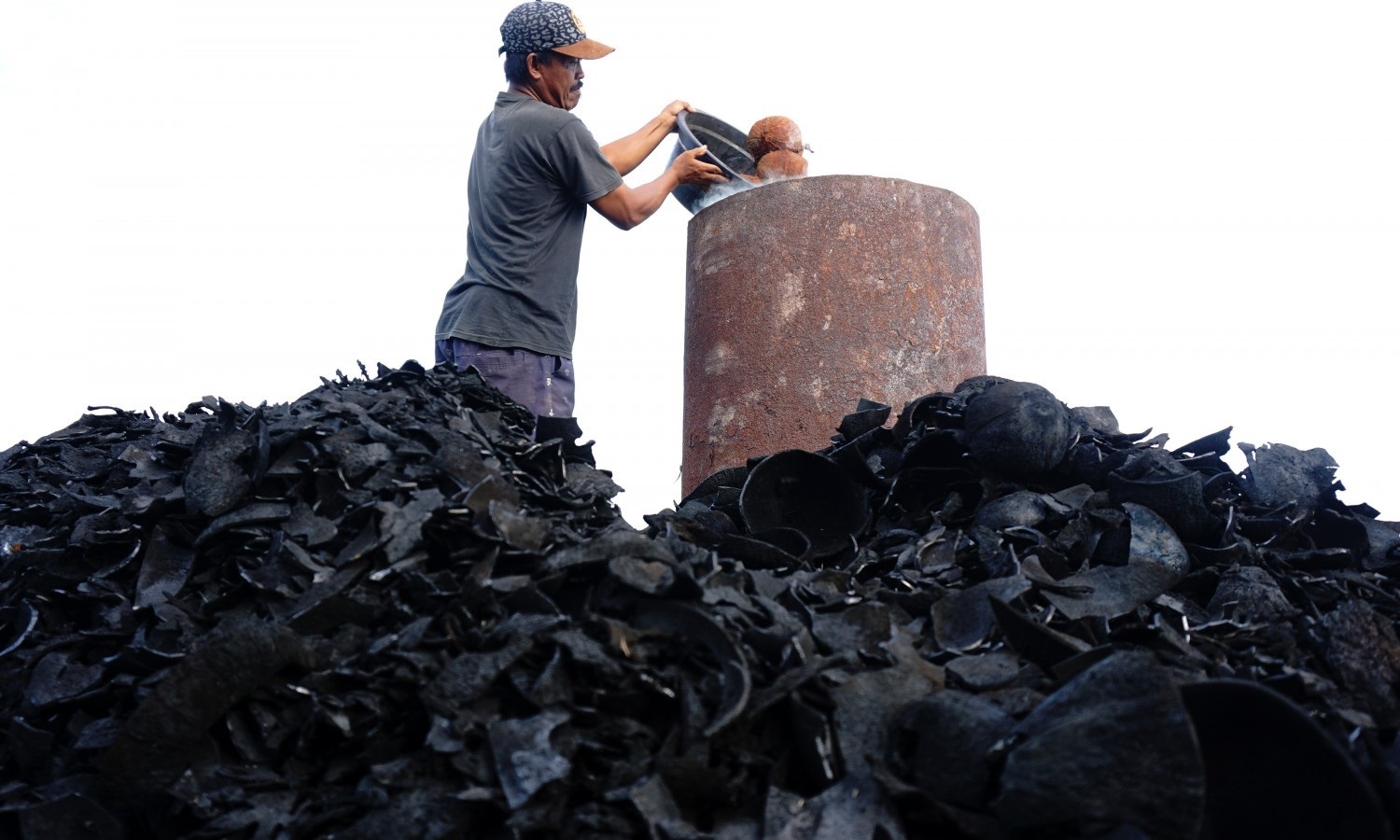
Charcoal briquettes Indonesia – Indonesia is a country with a rich history of charcoal production. Charcoal has been used for cooking and heating in the country for centuries, and it continues to be an important source of fuel for many households. However, the traditional method of producing charcoal has been associated with a number of environmental and social issues. In recent years, there has been a growing interest in the production of charcoal briquettes as a more sustainable alternative to traditional charcoal.
In order to create charcoal briquettes, charcoal dust is combined with a binder, such as clay or starch. The mixture is then dried after being compressed into a briquette shape. In terms of energy content, charcoal briquettes are comparable to ordinary charcoal, but they are lighter, easier to handle, and emit fewer hazardous emissions.
Production and use of charcoal briquettes have significantly increased in Indonesia in recent years. This is partly because people are becoming more conscious of the social and environmental problems that traditional charcoal production raises. Because they are created from waste products, such as sawdust and coconut shells, which would otherwise be thrown away, charcoal briquettes provide a more environmentally friendly option.
Using Processed Coconut Production Waste to Create the Right Products
Indonesia’s charcoal briquette industry also contributes to job growth and local community support. Small-scale producers who depend on the sale of charcoal briquettes make up a large portion of the industry’s workforce. The government and local communities are assisting in supporting these producers and guaranteeing that they may continue to make a life from the industry by encouraging the manufacturing of charcoal briquettes.
Also, a variety of environmental advantages have been linked to the production of charcoal briquettes in Indonesia. The amount of waste that would otherwise be dumped in landfills is decreased by using waste materials to make charcoal briquettes. Also, compared to traditional charcoal production, the production of charcoal briquettes emits less smoke and other hazardous emissions, which lessens the industry’s impact on the environment.
In Indonesia and other nations, there are initiatives to encourage the use of sustainable charcoal briquettes. For instance, several businesses are currently making charcoal briquettes from biomass, which is a renewable and more sustainable source of raw material, such wood chips and agricultural waste. This has aided in lowering the environmental impact of the production of charcoal briquettes and encouraging sustainable business practices.
Maybe you like to read the following article Controlling Soil Slope using Erosion Protection Matting Coir Mats
Charcoal Briquettes Indonesia Business Can Reduce Deforestation
Yet, there are further difficulties related to charcoal briquettes Indonesia production. Making sure the production method is sustainable and does not contribute to deforestation or other environmental problems is one of the major challenges. Also, it is important to guarantee that the charcoal briquettes meet the specifications needed for usage as a cooking fuel and are of a consistent quality.
In conclusion, Indonesian charcoal briquette production provides a more environmentally friendly substitute for conventional charcoal. Traditional charcoal produces more smoke and other harmful emissions than charcoal briquettes, which are manufactured from waste materials. Also, the manufacture of charcoal briquettes helps regional economies and jobs in the area.
Despite the difficulties in producing charcoal briquettes in Indonesia, there is a chance to promote sustainable practices and lessen the industry’s negative effects on the environment thanks to the growing interest in the sector.