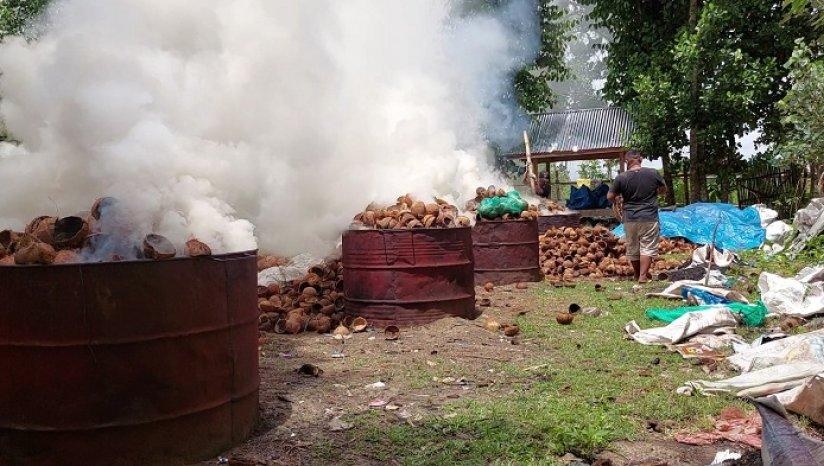
Agricultural waste briquettes are a type of fuel made from agricultural waste materials such as rice husk, wheat straw, sugarcane bagasse, and other agricultural residues. These waste materials are compressed under high pressure to form a compact, dense, and uniform biomass fuel that can be used as a substitute for traditional fossil fuels like coal, wood, and charcoal.
Agricultural waste briquettes have several advantages over traditional fuels, such as lower carbon emissions, higher calorific value, and reduced ash content. They are also a sustainable and renewable source of energy, as they are made from waste materials that would otherwise be burned or left to decompose, releasing greenhouse gases into the atmosphere.
Agricultural waste briquettes are gaining popularity in many countries as a viable alternative to traditional fuels, particularly in rural areas where access to energy is limited. They can be used for cooking, heating, and generating electricity, and can help reduce dependence on non-renewable sources of energy.
An Agricultural Waste Briquette can Make A High Quality Briquettes
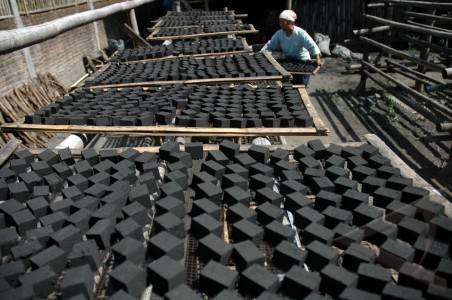
Agricultural waste briquettes can be of high quality if they are made using the right technique and with good quality raw materials. The quality of agricultural waste briquettes depends on several factors, such as the type and quality of the raw material, the moisture content of the raw material, the particle size of the raw material, the type of binder used, and the compression pressure and temperature during briquette production.
To make high-quality agricultural waste briquettes, it is important to use dry, homogeneous, and finely ground raw materials, as well as a good quality binder that can help to hold the briquettes together. The briquetting process should also be carefully controlled to ensure that the briquettes are formed under high pressure and temperature, which can help to increase their density and strength.
In addition, the quality of agricultural waste briquettes can also be improved by using advanced briquetting technologies that can produce briquettes with a consistent size, shape, and density. Some of these technologies include screw extrusion, hydraulic press, and piston press, which can produce high-quality briquettes with a high degree of automation and efficiency.
Overall, with proper raw material selection and processing, along with appropriate briquetting techniques, agricultural waste briquettes can indeed be of high quality and offer an environmentally friendly and sustainable alternative to traditional fossil fuels.
Conclusion
In conclusion, agricultural waste briquettes are an innovative and sustainable solution to the problem of waste disposal and energy generation. By compressing agricultural waste materials into a compact and uniform biomass fuel, these briquettes can be used as an efficient substitute for traditional fossil fuels such as coal and wood.
The quality of agricultural waste briquettes can be improved by using the right technique and good quality raw materials, as well as advanced briquetting technologies. As a renewable and environmentally friendly energy source, agricultural waste briquettes have the potential to help reduce greenhouse gas emissions and promote sustainable development, particularly in rural areas where access to energy is limited.
You may like to read the article about Coir Geotextiles in Roads is One of The Coconut Coir Product Implementation