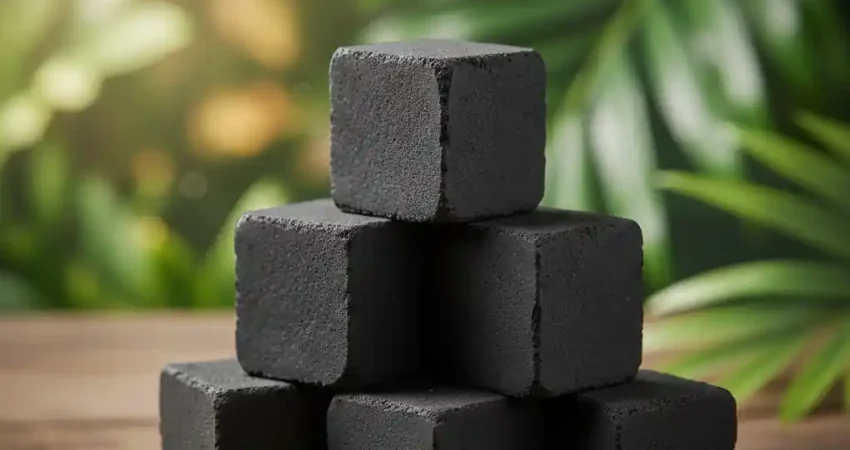
Making charcoal from coconut shell efficiently requires controlled carbonization, precise temperature management, and strict quality supervision to produce premium briquettes for global markets. Moreover, producers must ensure consistent raw material selection and standardized processing methods to achieve reliable combustion performance. Therefore, companies that apply systematic production strategies gain stronger competitiveness in export oriented charcoal industries.
Making Charcoal from Coconut Shell with Proper Raw Material Selection
First, manufacturers carefully select mature coconut shells with low moisture content to ensure stable carbonization and higher fixed carbon levels. In addition, they clean the shells thoroughly to remove dirt and fibers that may reduce final charcoal purity. As a result, proper raw material preparation significantly improves burning efficiency and reduces unwanted smoke during application.
Preparing Materials
Next, workers dry the coconut shells under controlled conditions to prevent excessive steam formation inside the kiln chamber. Consequently, balanced moisture levels support uniform heating and minimize cracking during the carbonization stage. Furthermore, consistent material sizing helps operators maintain predictable thermal distribution throughout the entire process.
Making Charcoal from Coconut Shell Through Controlled Carbonization
Subsequently, operators load dried coconut shells into carbonization kilns and monitor airflow carefully to maintain stable combustion conditions. Meanwhile, they regulate internal temperatures precisely to avoid incomplete burning or excessive ash formation. Therefore, accurate temperature control directly influences calorific value and long burning performance of the produced charcoal.
Temperature Stability
Importantly, technicians maintain gradual heating stages to ensure complete carbon transformation without structural damage to the shell material. As a result, the charcoal achieves dense structure and produces consistent heat output for shisha and barbecue industries. Additionally, controlled cooling phases prevent sudden fractures that may reduce mechanical strength.
Making Charcoal from Coconut Shell into High Density Briquettes
After carbonization, producers crush the charcoal into fine powder and sieve it to obtain uniform particle sizes. Then, they mix natural binders with measured ratios to create strong and compact briquette formulations. Consequently, this systematic blending process enhances durability without compromising clean burning characteristics.
Compression Process
Furthermore, hydraulic presses compress the mixture under high pressure to form uniform cube or pillow shapes. As a result, dense briquettes generate stable heat, extended burning time, and minimal ash residue. Therefore, professional buyers prefer high compression briquettes for consistent performance in commercial environments.
Making Charcoal from Coconut Shell with Export Quality Standards
Moreover, quality control teams test moisture content, fixed carbon percentage, and ash levels before packaging the final products. In addition, they conduct burning tests to verify heat stability and structural integrity during extended use. Consequently, strict quality evaluation ensures that each shipment meets international buyer specifications and safety standards.
If you want deeper technical insight, read our detailed guide about how to make briquettes from coconut shell to understand each production phase clearly and systematically.
At Jacoid, we apply integrated production management, modern kiln systems, and consistent laboratory testing to maintain reliable supply capacity. Furthermore, Jacoid prioritizes sustainable coconut shell sourcing to support environmentally responsible manufacturing practices.
Conclusion
In conclusion, efficient production depends on disciplined process control, accurate temperature management, and strict quality monitoring at every stage. Moreover, companies that implement structured manufacturing systems achieve stable heat performance and competitive export value. Therefore, making charcoal from coconut shell efficiently requires both technical expertise and consistent operational standards to deliver premium briquettes worldwide.