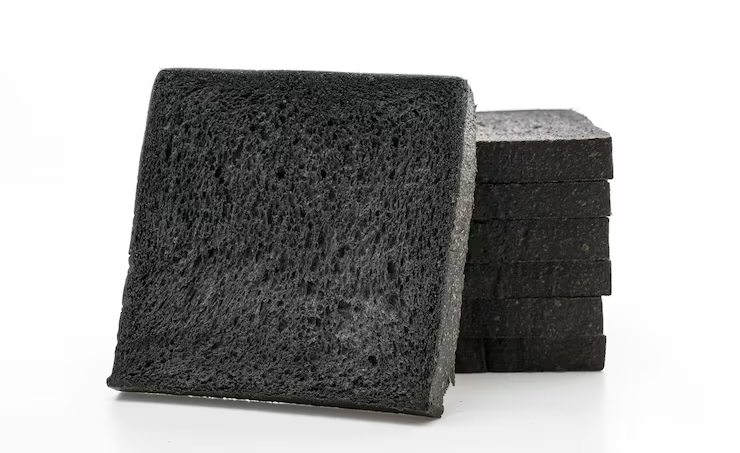
The demand for eco-friendly fuel has been increasing worldwide, and one of the most popular choices in the market is coconut shell briquettes. Known for their long burning time, low smoke, and sustainable production, these briquettes are widely used for BBQ, grilling, and shisha. However, one of the most common questions among buyers is What is the actual coconut shell briquettes price, and what factors influence it?
Why Coconut Shell Briquettes Are in High Demand
Before discussing prices, it’s important to understand why coconut shell briquettes have become so popular.
-
Eco-Friendly – They are made from coconut shells, a renewable resource that would otherwise be discarded as agricultural waste.
-
Longer Burning Time – Compared to wood charcoal, coconut briquettes burn hotter and longer, making them more efficient.
-
Low Smoke and Odor – Perfect for indoor and outdoor cooking, as well as shisha lounges.
-
Export Market Potential – Countries in Europe, the Middle East, and Asia have high demand, driving the industry’s growth.
These benefits explain why many buyers and distributors are now looking at the coconut shell briquettes price to determine whether they are a good investment.
Factors That Influence Coconut Shell Briquettes Price
The cost of coconut shell briquettes can vary depending on several key factors:
1. Quality of Raw Material
Premium-grade briquettes made from fully carbonized coconut shells are more expensive because they burn longer and produce less ash.
2. Production Method
Manually pressed briquettes are usually cheaper, while machine-pressed briquettes have higher density, better durability, and therefore a higher price.
3. Shape and Size
Cube-shaped briquettes, commonly used for shisha, often come at a higher price compared to irregular-shaped BBQ briquettes due to uniformity and demand.
4. Packaging and Branding
Export-quality briquettes with branded packaging cost more than bulk packaging. Attractive packaging also increases market value.
5. Market Location and Shipping
The coconut shell briquettes price can vary depending on the destination country. Shipping costs and import duties play a big role in final pricing.
Average Coconut Shell Briquettes Price in the Market
While prices vary, here’s a general overview based on international trade data and market insights:
-
Local Market (Indonesia, India, Philippines): Around $300 – $500 per ton depending on quality.
-
Export Market (Europe, Middle East, USA): Prices range from $800 – $1,200 per ton, influenced by packaging, certification, and shipping costs.
-
Retail Price: For end-users, coconut shell briquettes are often sold in 1 kg to 10 kg packs, priced between $2 – $5 per kg.
These figures give buyers a rough idea of the global coconut shell briquettes price, though actual costs may vary based on supplier agreements.
Tips for Buyers
If you are planning to purchase coconut shell briquettes, consider these tips:
-
Compare Multiple Suppliers: Always request quotations from different manufacturers.
-
Check Quality Standards: Look for briquettes with certifications such as ISO or SGS for guaranteed quality.
-
Understand Minimum Order Quantity (MOQ): Exporters often require bulk purchases, which may influence per-ton pricing.
-
Negotiate Shipping Terms: Prices can be lower if you buy directly from factories near ports.
Conclusion
The coconut shell charcoal briquette price is influenced by multiple factors including raw material quality, production methods, packaging, and global demand. While prices in local markets remain affordable, the export value is significantly higher due to shipping and branding. For businesses and distributors, understanding these price dynamics is crucial before entering the market.
Whether you are a wholesaler, retailer, or consumer, coconut shell briquettes remain a cost-effective and eco-friendly fuel choice. With the right supplier and knowledge of pricing structures, you can secure high-quality briquettes at competitive rates while supporting sustainable energy solutions.