Coir geotextiles uses – Coconut is 100% biodegradable, organic, and made from fiber. The consistency of coconut is thick, solid, and rigid in nature. The components that make up coir fiber include cellulose and lignin, for the most part. Coir fiber is resistant to natural elements and degradation by fungi and bacteria. This means that coconut’s degradation rate is much lower than that of any other natural fiber. This resistance is attributed to the high percentage of lignin in the composition.
Coir fiber can now be found in the form of woven, knitted rugs as well as non-woven rugs that are sewn together. These are used in engineering in various applications related to geotechnical work, for example, in polymer applications in civil engineering. They have a long life and are not harmful to the environment. Geotextiles have become popular recently in the geotechnical field. It has been in the industry for over 50 years.
They have already proven their worth in the various sectors they use and our environment. Geosynthetics have dominated the market for a long time and overtaken geosynthetics, which can harm the environment in the long term.
Preventing Erosion is One of The Advantages
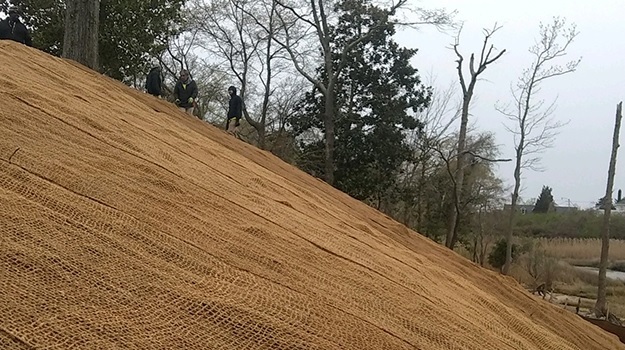
Coconut coir geotextiles uses have effectively prevented landslides or soil erosion and prevented the soil from moving from its place. And also prevents the erosion of nutrients that can make plants grow. All due to the high ability of coconut geotextiles to absorb water and become humus. Within three years, the coconut fruit will be decomposed by the soil and the plants living there because the material comes from plants.
Coconut geotextiles are a net made from coconut shell fiber that helps recover mines, beaches, or forests. Coconut coir geotextiles uses as act as a growing medium for plants, suitable for reclaiming old mines or beaches, strengthening cliffs, preventing erosion, strengthening soil, strengthening paths along railways, and reinforcing ridges for roads or bridges. Its biodegradable and strong nature helps to facilitate the growth of new plants in coconut fields located in former mining lands.
The Feature of Coir Geotextiles Uses
The surface cover is essential in erosion control because it reduces the impact of raindrops falling on bare soil and the wind blowing away soil particles. It also slows down the speed of water flowing over land. The erosion risk is significantly reduced when soil coverage exceeds 30%. Full coverage is achievable for many grazing and cropping systems.
- Features of Geo Textiles:
- It can separate, filter, reinforce, protect and drain when used with soil.
- It drains areas where water collects, keeping the ground in place.
- It acts as an effective filter, capturing some materials to avoid clogging the drains.
- Reinforces soil structures such as drains, keeping layers in place.
- Protects against erosion in areas like roads and beaches.
The runoff is concentrated as it flows down the slope. When rivers that drain large basins reach the coast, they are usually several hundred meters wide. While surface cover helps to disperse runoff, runoff concentration is inevitable. Basin-wide coordination is important in implementing flow control measures. The runoff may pass through several properties and cross several roads (sometimes rail lines) as it moves from the outermost part of the watershed to the main drainage line or stream.
Maybe you like to read the following article Coir Geotextiles in Roads is One of The Coconut Coir Product Implementation