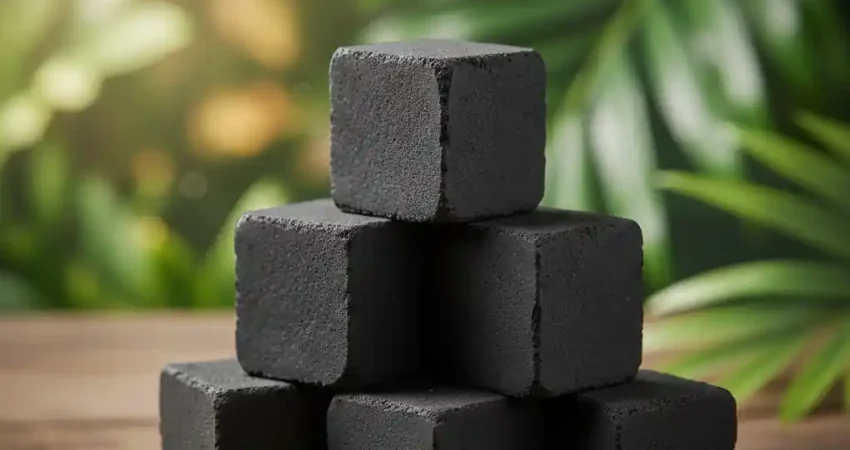
Understanding the right coconut shell briquette mixture formula is essential for producing briquettes that are efficient, durable, and environmentally friendly. Many producers focus on raw materials alone, but the mixture formula plays an equally critical role in determining burning time, ash content, and overall performance. For a deeper breakdown of the core components, you can explore the article on Ideal Composition of Coconut Shell Briquette Mixture. Additional insights about sustainable coconut-based products can also be found on the main website, jacoid.com, which discusses broader applications and industry standards.
A high-quality coconut shell briquette starts with properly carbonized coconut shells. Carbonization temperature and duration directly affect fixed carbon levels and moisture content. However, even the best charcoal will not perform optimally without a well-balanced mixture formula. This is why understanding the coconut shell briquette mixture formula is crucial for consistent results, especially for export-grade or long-burning briquettes.
Key Components in the Mixture Formula

The standard coconut shell briquette mixture formula generally consists of three main elements: coconut shell charcoal powder, a natural binder, and water. Coconut shell charcoal usually makes up around 90–95% of the mixture. It should be finely ground to ensure uniform density and smooth molding. Particle size consistency helps improve compression and reduces cracking during drying.
The binder, typically tapioca starch, makes up approximately 3–6% of the total mixture. This component is essential for maintaining briquette shape and mechanical strength. Too little binder can cause briquettes to crumble, while too much may increase smoke and ash content. Water is added gradually, just enough to activate the binder and create a moldable texture without making the mixture too wet.
Why the Right Formula Matters
Using the correct coconut shell briquette mixture formula directly impacts product quality. A balanced formula results in briquettes that burn longer, produce minimal ash, and maintain stable heat. This is particularly important for applications such as shisha, barbecue, and industrial heating, where consistency is a key requirement.
An optimized mixture also improves production efficiency. Briquettes with proper composition dry faster, experience fewer defects, and have a lower rejection rate. Over time, this reduces waste and helps manufacturers maintain steady output without compromising quality.
Adjusting the Formula for Different Needs
While there is a standard approach, the coconut shell briquette mixture formula can be adjusted based on intended use. For example, shisha briquettes may require a slightly higher density and lower ash content, while barbecue briquettes might prioritize ignition speed and heat output. Small adjustments in binder ratio or charcoal fineness can make a significant difference in performance.
Testing and consistency are essential. Producers often run small trial batches to fine-tune the mixture before scaling up. Documenting these adjustments helps ensure repeatable quality across production cycles.
Conclusion
A reliable coconut shell briquette mixture formula is the foundation of high-quality briquette production. By carefully balancing charcoal, binder, and water, manufacturers can create briquettes that meet performance expectations and environmental standards. As global demand for sustainable fuel alternatives continues to grow, mastering the mixture formula becomes a valuable advantage in a competitive market.
