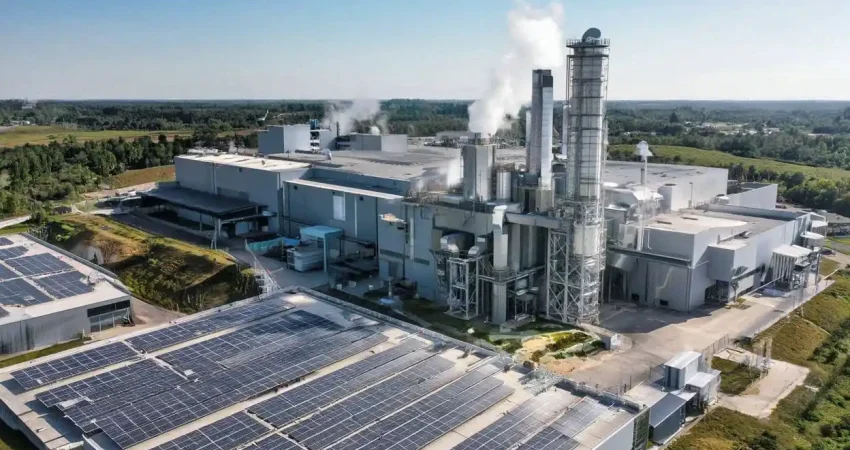
Low emission charcoal briquette production facilities represent an innovative solution in the modern alternative energy industry. This technology combines production efficiency with high environmental responsibility. Low emission charcoal briquette facility is designed to minimize carbon footprint while maximizing production output quality.
With increasing global environmental regulations, investment in eco-friendly facilities becomes necessary. Therefore, understanding the components and advantages becomes important for industry players. Let’s explore the key aspects of this production facility.
Components of Low Emission Charcoal Briquette Facilities
Low emission charcoal briquette facility consists of several integrated technology units. First, carbonization systems with gas recovery capture volatile emissions for energy conversion. Second, multi-stage air filtration units filter harmful particles before releasing them.
Furthermore, facilities are equipped with closed cooling systems that prevent smoke leakage. This technology reduces air pollution by 80 percent compared to conventional methods. Consequently, plant operations remain compliant with international standards.
Then, real-time monitoring systems continuously track emission levels. Meanwhile, automatic sensors detect anomalies and activate emergency reduction protocols. Thus, this integration ensures environmental regulation compliance at all times.
Emission Reduction Technologies in Briquette Facilities
Modern facilities use cyclone separator technology to separate solid particles from exhaust gases. Specifically, this equipment works on centrifugal principles to capture 95 percent of dust particles. Additionally, wet scrubbers remove acidic compounds and harmful gases.
Then, afterburner systems oxidize volatile organic compounds at high temperatures. As a result, this process converts harmful pollutants into safer CO2 and water vapor. Notably, coconut shell charcoal briquette plant with this technology achieves the lowest emission levels.
Furthermore, heat recovery systems utilize waste heat to support other production processes. Consequently, energy efficiency increases up to 40 percent through reuse. Therefore, operational costs drop significantly.
Operational Benefits of Low Emission Facilities
Low emission charcoal briquette facility offers competitive advantages for plant operators. Specifically, environmental regulation compliance opens access to premium global markets. Indeed, many countries prioritize products from certified facilities.
Then, high energy efficiency reduces long-term production costs. Notably, initial investment pays back in 3-5 years. Moreover, government tax incentives accelerate investment returns.
Main advantages include:
- Emission reduction up to 80 percent from standards
- Energy efficiency increases 40 percent through recovery
- Consistent product quality with strict control
- Lower maintenance costs with automation
Certification Standards for Charcoal Briquette Facilities
Low emission facilities must meet international standards for credibility. First, ISO 14001 for environmental management becomes the basic certification. Then, Carbon Trust Standard certifies verified emission reductions.
Furthermore, Clean Development Mechanism (CDM) certification opens carbon credit trading opportunities. As a result, facilities can sell credits for additional revenue. Thus, green technology investment provides multiple streams.
For comprehensive information about industry standards and production, doyan-masak.com provides useful references. Additionally, this platform helps operators understand trends and implementation.
Implementation of Low Emission Briquette Facilities
Building a low emission charcoal briquette facility requires comprehensive planning and investment. Initially, the first stage involves environmental feasibility studies and impact analysis. Subsequently, experienced consultants help design systems appropriate for capacity.
Then, technology vendor selection must consider track record and support. Moreover, operator training becomes crucial to maximize efficiency. Consequently, facilities operate optimally from commissioning.
Furthermore, continuous monitoring and upgrades maintain competitive advantage. Similarly, investment in R&D enables adaptation to regulations. Therefore, this approach ensures sustainability.
Conclusion
Low emission charcoal briquette facility represents the future of responsible and profitable charcoal industry. This facility integrates advanced emission reduction technology with operational efficiency for optimal results. Moreover, competitive advantages include market access, energy savings, and carbon credit opportunities. Additionally, compliance with international standards opens export opportunities and increases brand value. Therefore, investment in low emission facilities is a smart strategy to build sustainable business while contributing positively to environmental preservation.
