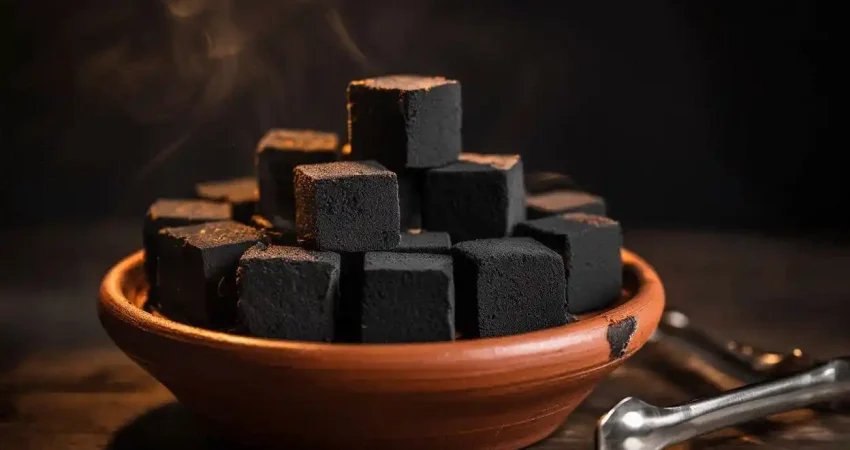
A great shisha session depends on more than just premium tobacco. The charcoal you place on the bowl determines everything from heat consistency to flavor clarity. Knowing the right tips choosing shisha charcoal helps both beginners and seasoned users get the most out of every session.
Why Choosing Shisha Charcoal Matters
Many shisha users underestimate how much charcoal influences the final result. Poor charcoal introduces off-putting smells, uneven heat, and a shorter session overall. In contrast, the right charcoal keeps your bowl at a stable temperature and allows the tobacco’s natural flavors to shine through without interference.
Beyond flavor, charcoal quality also affects your health. Chemical-laden quick-light options release compounds that you ideally want to avoid during extended sessions indoors or in enclosed spaces.
Types of Shisha Charcoal Explained
Before applying any tips choosing shisha charcoal, it helps to understand what options exist on the market.
- Quick-light charcoal — Pre-treated discs that ignite within seconds. Convenient for beginners, but the chemical coating often alters taste and produces excess smoke.
- Natural coconut charcoal — Made from compressed coconut shell carbon, this type burns cleanly, lasts longer, and produces minimal ash. It stands as the top choice among experienced hookah enthusiasts worldwide.
- Bamboo or wood charcoal — A natural alternative, though it typically burns faster and less evenly compared to coconut-based varieties.
For most users, natural coconut charcoal offers the best overall balance between performance, safety, and value.
Tips Choosing Shisha Charcoal by Quality Standards
Not all natural charcoal products deliver the same results. Therefore, evaluating a few measurable quality indicators before buying makes a significant difference.
First, check the ash content. High-quality shisha charcoal produces less than 3% ash, keeping your bowl clean and your session uninterrupted. Second, look for a calorific value of at least 7,000 kcal/kg — this figure confirms the charcoal holds enough energy to sustain consistent heat. Third, verify that the moisture content stays below 8%, as excess moisture causes ignition problems and mid-session burnout.
Additionally, pay attention to briquette shape and uniformity. Cube-shaped pieces with smooth, even surfaces distribute heat more predictably across the bowl, giving you better control throughout the session.
How to Use and Store Charcoal Correctly
Applying the right tips choosing shisha charcoal means little if the product suffers poor handling afterward. Always ignite natural charcoal using an electric coil burner rather than an open flame, as this ensures even heating all the way through the piece.
Store unused charcoal in a sealed, dry container away from moisture and direct sunlight. Proper storage preserves burn quality and prevents premature degradation between sessions.
For users who want a more detailed breakdown of product selection criteria, how to choose quality shisha charcoal covers the topic thoroughly from a practical standpoint.
Business owners and shisha lounge operators looking to explore broader topics around charcoal sourcing and the shisha lifestyle can also find useful references at doyan-masak.com, which features a wide variety of informative blog content.
Conclusion
Applying the right tips choosing shisha charcoal transforms an ordinary session into a consistently enjoyable one. From understanding the differences between charcoal types to evaluating measurable quality standards and storing products correctly, every step contributes to a better outcome. Natural coconut charcoal sets the standard for clean heat, extended burn time, and flavor that stays true to your blend. Whether you are a casual user at home or a professional running a hookah lounge, making informed charcoal choices is one of the simplest ways to raise the quality of every single session you deliver.
